Black Sheep, Black Sheep What Do You See?
- Leah Mattice
- Apr 2, 2020
- 2 min read

Updated: May 20, 2020


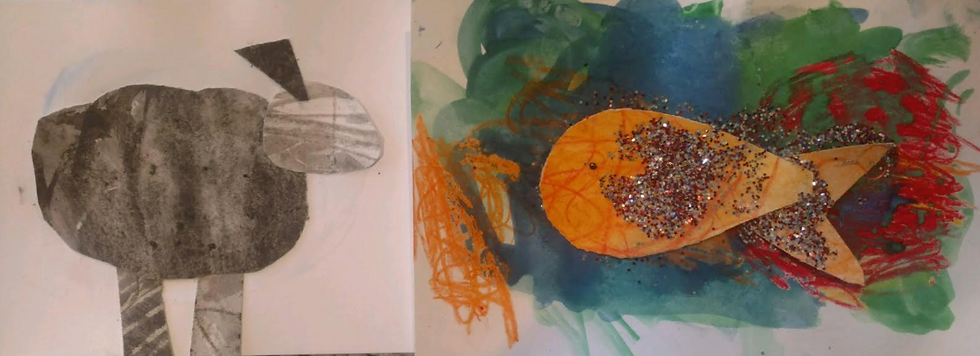


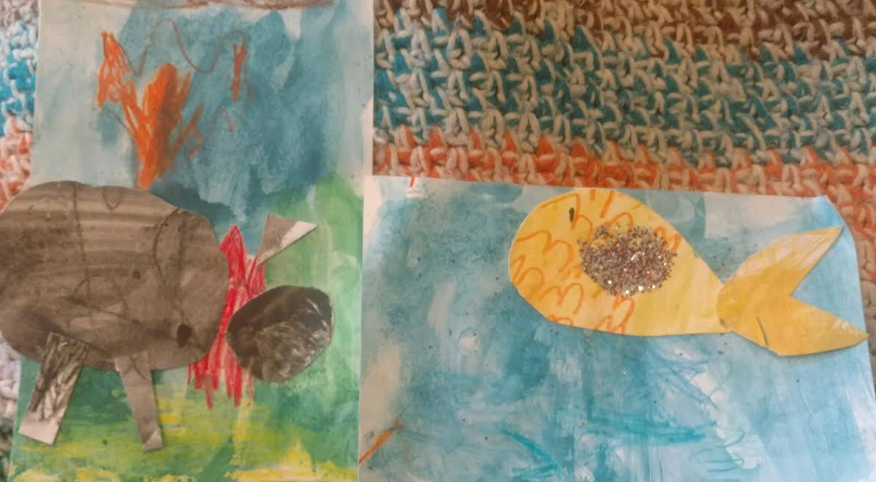

Kindergarten grade made adorable sheep and fish portraits after reading Eric Carle's, "Brown Bear, Brown Bear, What do you see?" After reading the story, they learned about Carle's process of illustration. Before drawing, he paints the colors and textures for his characters. Next, he cuts out the shapes of the characters from his painted colors and textures. Finally, he draws or paints on details, like facial features. Kindergarten followed these steps to transform materials into the scene from the story when the black sheep sees a goldfish looking at him. They also added an extra step that Carle often skips; drawing backgrounds for the characters. Kindergarten students reminded me of the beautiful, glittery Rainbow Fish, so we read "The Rainbow Fish," by Marcus Pfister. We discussed how the the glittery scales symbolize empathy, generosity, and friendship, and we added glitter to our fish art. Throughout each step of the creative process, students had to envision the end product. Because artists typically draw shapes and then color them in, it was a unique challenge to instead begin with creating the colors and textures for characters prior to drawing out any shapes.
This lesson was initially written to teachColorado Department of Educations 2020 Visual Arts for Kindergarten:
Kindergarten, Standard 1. Observe and Learn to Comprehend, Grade Level Expectation:1. Identify how artists use visual art and design to communicate. Evidence Outcome a. Recognize that visual art and design can tell stories.
For other age groups, this focuses on the following CDE 2020 Visual Arts Standards:
, 1st Grade, Standard 2. Envision and Critique to Reflect, Grade Level Expectation 1. Question and respond to the stories told and the feelings expressed in works of visual art and design. Evidence Outcome: b. Students can envision the potential of a material to be transformed to tell a story.
Fourth Grade, Standard 1. Observe and Learn to Comprehend, Grade Level Expectation:1. Uncover how artistic intent can be enhanced through the use of the language of visual art and design.Evidence Outcome a. Hypothesize the steps an artist may have used to complete a work of visual art or design.
Fifth Grade, Standard 2. Envision and Critique to Reflect, Grade Level Expectation:2. Visualize intended meaning and determine a method of planning that best supports personal artmaking. Evidence Outcome b. Identify various methods of planning for visual art and design.
Comments